


For many individuals with disabilities, becoming more independent is a valuable goal in life. Although the support services play a crucial role, having the real-life skills to live on a daily basis could be a game changer in terms of confidence, being able to be self-reliant and living with ease. The goal of day habilitation programs is to assist the people to acquire these critical skills through structured activities, individual mentoring and social interactions.
The programs provide growth opportunities that far extend beyond the classroom, whether it is how to handle everyday activities, better communication, or participate more actively in the community. Families around the United States are increasingly turning to day habilitation life skills programs as the means of enabling their loved ones to live meaningful and independent lives.
What is day habilitation?
Day habilitation refers to community-based service that assists the intellectually and developmentally challenged individual by assisting them build functional, social and practical skills. Unlike traditional educational programs, day habilitation is an orientation training that is geared towards real-world experiences in preparing the participants for everyday living.
Programs are normally designed to individual interests and capabilities. Activities that could be done by the participants are those that enhance communication, socialization, self care, decision making and participation in the community. The ultimate goal is to make people as self-sufficient as they can be and enhance their overall well-being and involvement in society.
Why life skills matter
Independence is based on life skills. These abilities help them to cope with everyday duties, come up with better choices and to socialize with others without any hesitations.
Some key benefits of life skills development include:
- Greater self-confidence
- Improved problem-solving abilities
- Enhanced social relationships
- Increased community participation
- Better preparation for employment opportunities
- Reduced dependence on caregivers
Acquiring these crucial skills, one will be able to play a more active role in their everyday lives and self-development.
Essential skills taught in day habilitation programs
Day habilitation services can be based on practical activities which can be utilized by participants in everyday life.
1. Personal care and self-management
Maintaining personal hygiene and self-care routines is an important aspect of independence.
Participants may learn:
- Grooming and hygiene practices
- Dressing appropriately for different occasions
- Medication awareness and routines
- Healthy eating habits
- Time management skills
The skills make people feel more confident and capable in their lives.
2. Communication and social interaction
Strong communication skills are critical for building relationships and participating in the community.
Programs often help individuals develop:
- Verbal and nonverbal communication skills
- Active listening techniques
- Conversation skills
- Conflict resolution strategies
- Appropriate social behaviors
Enhanced social interactions in terms of friendships, workplace relationships and inclusion can be experienced due to improved communication.
3. Household and daily living skills
Most of the programs have training that facilitates independent living at home.
Participants may practice:
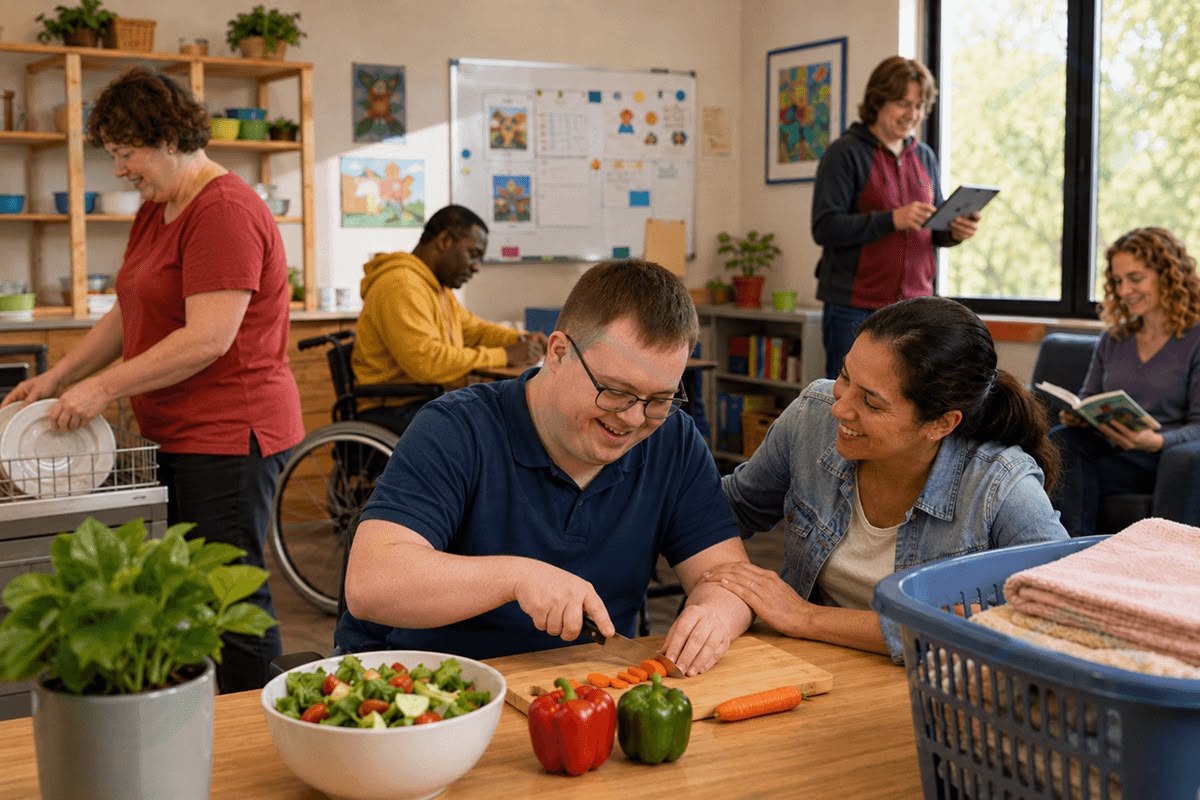
- Meal preparation
- Laundry and housekeeping
- Grocery shopping
- Budgeting and money management
- Using public transportation
Such practical experiences assist individuals in handling responsibilities of day-to-day life with more confidence.
4. Building community connections
Community integration is one of the most important elements of day habilitation. Often, participants are allowed to do activities outside the program setting, which enables them to apply skills in real life environments.
Examples may include:
- Visiting local libraries
- Shopping at neighborhood stores
- Participating in recreational activities
- Volunteering in community organizations
- Attending local events
These experiences promote a desire to interact with others and enable individuals to feel more comfortable in the social environment. For many families seeking independent living NJ solutions, community-based skill development provides a practical pathway toward greater self-sufficiency and confidence.
Preparing adults for greater independence
The programs targeted to specifically assist adults with developmental disabilities in their transition to more independent lifestyles are numerous. As opposed to the emphasis on care and supervision, the modern day habilitation services are based on the emphasis on skill development and personal achievement.
The participants will be motivated to set individual goals and strive to achieve milestones that reflect their own personal interests and capabilities. This is a person-centered approach that encourages self-determination and empowers people to make a choice about their future. These achievements may result in a higher level of confidence, enhanced ability to make decisions and increased autonomy in everyday life in the long-term.
The role of families and caregivers
The families and caregivers are crucial elements to successful day habilitation programs. Home support is always necessary to further strengthen learning acquired in the programs.
Caregivers can encourage independence by:
- Promoting decision-making opportunities
- Practicing newly learned skills at home
- Celebrating accomplishments and progress
- Encouraging community participation
- Supporting long-term personal goals
When families and service providers work together, individuals often experience more consistent growth and success.
Conclusion
Day habilitation programs are crucial in the support provided to people with disabilities in equipping them with practical skills that they need in their daily lives. Individualized teaching, using community services and practical learning activities enables participants to have confidence, learn how to navigate everyday responsibilities by becoming more self-reliant.
From personal care and communication to budgeting and community participation, these programs provide valuable tools that support lifelong growth. Day habilitation services can play a significant role in helping families who want the opportunity to be independent and have meaningful community participation as a step toward a more fulfilling future.
FAQs
1. What is the primary goal of a day habilitation program?
The main objective is to assist them to acquire some useful life skills, interpersonal skills and community integration skills, which facilitate their increased independence and self-development.
2. Who can benefit from day habilitation services?
Day habilitation services are typically designed for individuals with intellectual or developmental disabilities who want to strengthen daily living skills and increase their level of independence.
3. How do day habilitation programs promote independence?
These programs also offer practical training in areas like communication, personal care, household management, budgeting, and community navigation, and assist those participants to develop confidence and attain self-sufficiency.
4. Are day habilitation services available throughout the United States?
Yes. Many states offer day habilitation services through community organizations and disability support providers, although program structures and eligibility requirements may vary by location.
5. Can families participate in the habilitation process?
Absolutely. Family intervention can usually enhance the results by strengthening skills in most homes, promoting independence and empowering participants in their achievement of their individual objectives.