



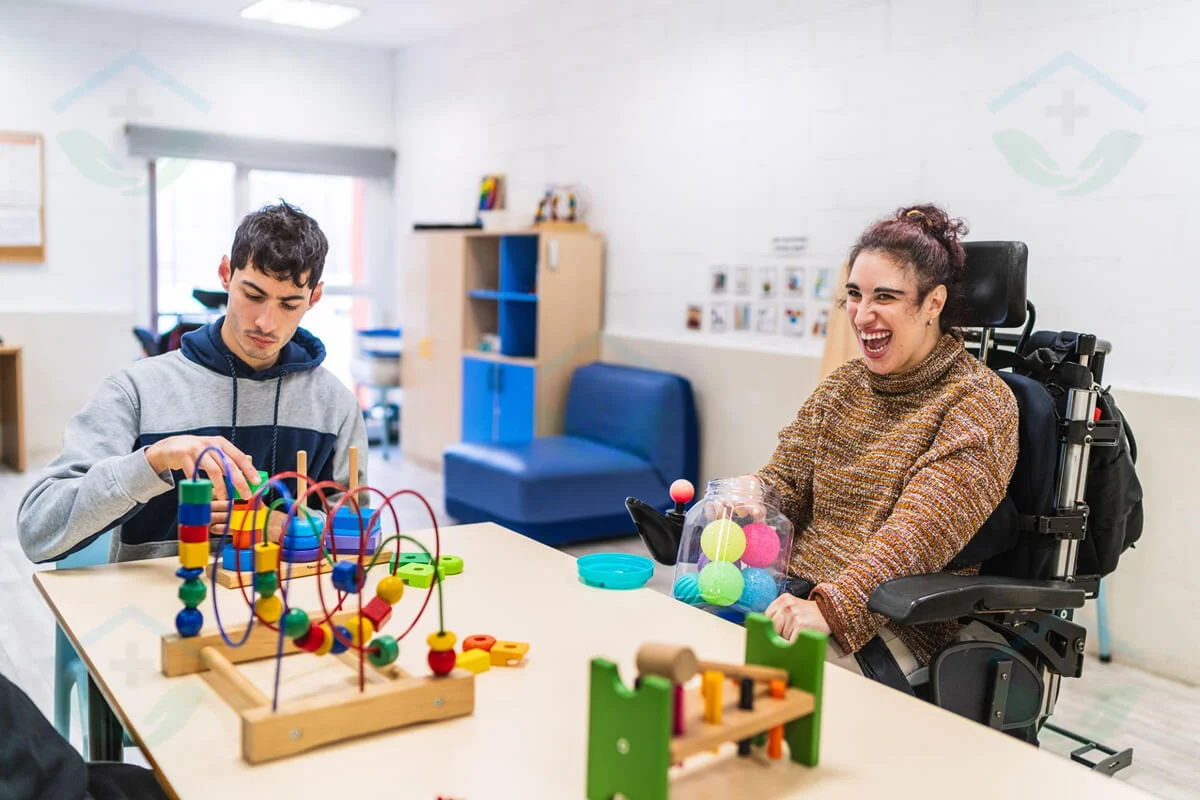
For decades, structured facility-based care has been the foundation of support services for individuals with developmental and intellectual disabilities. Although these settings are safer, more routine, the future is leaning more into a more inclusive, person-centered style. Today, the focus is no longer limited to what happens inside a building—it extends into neighborhoods, workplaces, and social spaces.
This development is more specific to services such as day habilitation where it is not only the development of skills, but also significant involvement in daily life. Community integration has become a revolutionary model as it gives individuals the strength to be more independent, form relationships, and engage with the world around them.
Understanding the shift from facility-based to community-based models
Traditional programs were aimed at delivering care in confined settings. Although useful in several aspects, such models tended to restrict the exposure in reality. The participants were not able to create practical behaviors on the basis of the acquired skills as this is crucial to long-term independence.
Instead, community-based models fill this gap. Instead of isolating individuals, they encourage active participation in society whether it can be in the form of visiting the local businesses, volunteering, or attending public events. This shift is part of a larger trend towards inclusiveness and equal opportunity.
Why does community integration matter?
1. Real-life skill development
Learning in a real-world environment increases memorability and relevancy. For example, dealing with money at a local store or using public transportation teaches useful skills that cannot be completely simulated in the classroom.
2. Building social connections
Community integration promotes natural interactions. People establish relationships with neighbors, colleagues, and peers, reducing feelings of isolation and enhancing emotional well-being.
3. Promoting independence
Confidence is nurtured by being exposed to a real life scenario. With time, they will be more competent to make decisions, solve problems, and run day-to-day activities without any help.
4. Encouraging inclusion and awareness
The active involvement of people in the community brings about awareness and acceptance. With society appreciating capabilities instead of disability, they are able to be more embracing.
The role of modern programs in driving integration
An effective day habilitation program is extremely important in facilitating community involvement. Those programs are not restricted to organized activities performed indoors anymore, they now consist of:
- Community outings
- Volunteer opportunities
- Job readiness training
- Recreational activities in public spaces
The support professionals act as facilitators rather than supervisors; they just guide and leave the individuals to explore and learn.
A U.S.-based example: community integration in action
The service providers are moving towards community-based strategies in states such as New Jersey. An average Day Habilitation NJ model could incorporate collaborations with businesses, libraries, and communal centers in the area.
For instance, participants can use some part of the day in Newark, volunteering in a local food bank to help arrange delivered supplies and communicate with employees. This not only develops vocational skills, but also gives a feeling of purpose and contribution.
Otherwise, group visits to parks, museums, or cafes allow groups to interact socially, have free time, which strengthens the idea that individuals are active members of their communities.
Key components of successful community integration
- Person-centered planning
Each person has different objectives and interests. Activities should be customized and should be in line with personal aspirations be it work, training or social interactions.
- Collaborative partnerships
Strong connections with the local organizations and businesses put participants in place at a better position. It is these partnerships that enable long-term engagement of the community.
- Skilled support staff
Certified staff plays an important role in making sure safety and independence is fostered. They offer directions without restricting independence.
- Flexible program design
The inflexible schedules may hinder participation. Flexibility in programming also enables one to explore diverse experiences and adjust to the evolving needs.
Challenges and how to overcome them
Although community integration is associated with numerous benefits, there are also certain challenges:
- Transportation barriers: Quality transportation might be an obstacle to participation. There are solutions such as coordinated transit services and travel training.
- Community resistance: Lack of awareness can result into hesitation among local businesses or locals. This can be overcome through education and advocacy.
- Safety concerns: Striking the balance between being independent and safe requires careful planning and trained staff.
The service providers, families and the community must co-operate in order to address the challenges.
The future of support services
Policies and perspectives are undergoing a change and service providers are placing emphasis on inclusion, dignity, and independence. Technology is also playing a role, with tools that support communication, navigation, and skill development, further enhancing community participation. The end result is to establish a society in which people are not characterized by their limits but are appreciated due to their contributions.
Conclusion
The future of support services lies beyond the walls of traditional facilities. Community integration changes the way people learn, interact and grow, offering a more holistic and empowering approach.
The contemporary programs are transforming the concept of delivering substantial assistance by turning to real-life experiences, helping to enhance social bonds, and encouraging self-reliance. With more and more providers implementing this model the vision of an inclusive and supportive community is becoming more and more a reality.
FAQs
1. What is community integration in support services?
Community integration can be defined as the integration of individuals in everyday community activities that assist them in developing capabilities, connections, and autonomy beyond the traditional facility settings.
2. How does community integration benefit individuals?
It enhances real-life skills, increases confidence, social networks and belongingness.
3. Are community-based programs safe?
Yes, under the guidance of trained personnel and good planning, such programs could strike the right balance between safety and autonomy so that participants could be assisted at every moment.
4. What types of activities are included in community-based programs?
The activities may include volunteering, shopping, events, job training and recreational outings.
5. How can families support community integration?
Families can promote engagement, cooperate with the service providers and demand the inclusion in the local communities.