

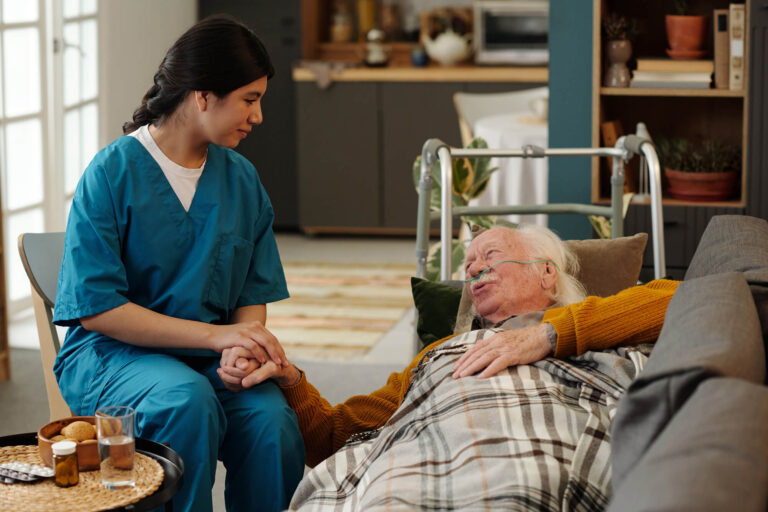


Dementia and Alzheimer’s disease can change a person’s life in many ways. As the condition progresses, everyday tasks may become harder. Families may also face difficult decisions about comfort, safety, and future care.
At an advanced stage, hospice care can help families focus on comfort rather than treatments aimed at slowing the disease. It provides support for the patient and the people caring for them.
Hospice care for dementia is based on the individual’s evolving needs and may involve medical care aimed at comfort, personal assistance, emotional support and information for the family. Knowing what to expect will help families to make informed decisions at this stage.
What does hospice care mean for people with dementia and Alzheimer’s disease?
Hospice is a form of care that concentrates on comfort and on the quality of life for a person who is nearing the end of their life, and it may be given at home, in a hospice facility, in a nursing home, or in another appropriate place.
For someone with advanced dementia, care may focus on:
- Managing pain and other symptoms
- Supporting comfortable eating and drinking
- Helping with personal hygiene
- Managing anxiety or agitation
- Providing emotional and spiritual support
- Educating family caregivers
- Helping families understand changes in the person’s condition
Hospice differs from treatment, which mainly aims at curing or controlling a disease, in that it concentrates on comfort and dignity.
At what stage should families think about choosing hospice care for someone with dementia?
A difficult question for families to decide upon is when to begin hospice care, since no one-size-fits-all sign applies to all individuals. Families and healthcare professionals should think about choosing hospice when dementia has advanced considerably, and the individual has shown a clear deterioration in their general condition.
Possible signs include:
- Significant difficulty communicating
- Increased dependence on others for daily activities
- Difficulty walking or remaining mobile
- Trouble swallowing
- Frequent infections
- Significant weight loss
- Repeated hospital visits
- Increasing weakness or sleeping
- Loss of interest in familiar activities
The fact that these signs exist doesn’t mean that hospice is the right choice; a healthcare professional and the hospice team can assess the person’s general condition and talk about eligibility. It is also advantageous to begin the discussion as early as possible since this allows families more time to understand their options.
How does care for patients who have dementia in a hospice setting provide support?
Because of advanced dementia, a person may find it difficult to explain that they are in pain or discomfort. In such cases, caregivers might have to notice changes in behaviour instead. The kind of care provided in a dementia hospice is aimed at identifying and managing these changes.
For instance, restlessness could be associated with discomfort, anxiety, or some other physical problem, and changes in eating habits should also be kept in mind. The hospice team will be able to assist families in understanding these changes and can suggest comfort-oriented methods according to the person’s requirements. We want to make the person as comfortable as possible without compromising their dignity.
What does end-of-life care for Alzheimer’s involve?
Alzheimer’s end of life care can include a number of different kinds of support, with the specific services needed varying according to the patient’s condition and the hospice provider. Medical support can involve the management of symptoms and working with the patient’s healthcare team. Personal care can assist with bathing, repositioning, and other daily needs.
Emotional support is just as important; even though dementia can affect communication, the person’s emotional needs do not change. Hospice can also offer assistance to family members, giving caregivers advice as to what changes to anticipate and how they should react. This can make it easier to cope with a difficult period.
Is it possible to have hospice care at home?
Yes, hospice care can frequently be given in a person’s home when it is suitable. For a great many families, home has a familiar and comfortable atmosphere. It is possible for a patient to stay among things they know and people they know.
For instance, imagine a family in Phoenix, Arizona, looking after an older parent who has advanced Alzheimer’s disease; this parent has now become dependent on their family members for most of the daily activities.
Following their conversation with the healthcare provider, the family looks into hospice services, and a hospice team assists with the management of symptoms as well as giving advice to the family.
The family gets personal support at the same time as availing themselves of professional help, which enables them to spend more time with their loved one rather than having to make all the care decisions by themselves.
How does hospice care for memory loss fare with family caregivers?
Looking after a person who has advanced memory loss can be both a physical and an emotional strain on families, as the caregivers might have to give them support during the day and also at night. Hospice care for memory loss can offer an extra level of support for people who suffer from memory loss.
Depending on the care plan, hospice professionals may help with:
- Understanding disease progression
- Managing symptoms
- Providing personal care guidance
- Addressing changes in behavior
- Coordinating certain medical needs
- Preparing family members for end-of-life changes
- Providing emotional and bereavement support
It doesn’t mean that the family has to give up their role. Rather, hospice cooperates with the family caregivers.
What can families do to get ready for end-of-life care?
Thinking ahead can assist families in putting off having to make hard decisions when a crisis occurs; it is advisable for them to talk about the person’s wishes before it becomes more difficult to do so.
Important topics may include:
- Preferred place of care
- Advance directives
- Healthcare decision-makers
- Comfort-focused treatment preferences
- Religious or spiritual preferences
- Important personal routines
- Who should be involved in care decisions
Families should make sure that important medical information is kept in order. This will enable healthcare professionals to get a better understanding of the person’s history and present requirements.
What questions should families ask the hospice provider?
Picking a hospice provider is a significant choice, and families should ask questions before the services start.
Consider asking:
- What kinds of hospice services are included?
- Is it possible to give care at home?
- When to start hospice for dementia
- What frequency will visits from nurses or other professionals be?
- Who may the family reach after normal business hours?
- What measures are taken to manage the symptoms?
- What kind of assistance is available for caregivers?
- What would occur if there was a change in the patient’s condition?
- What bereavement services can I get?
Clear communication will help families to understand what they can expect.
How can families manage to keep their loved one comfortable?
Comfort doesn’t have to mean receiving medical treatment; established routines and a calm environment can also be of help.
Families can consider simple approaches such as:
- Keeping the room quiet and comfortable
- Playing familiar music
- Speaking calmly and reassuringly
- Maintaining familiar routines when possible
- Offering appropriate food and fluids based on the care plan
- Keeping the person clean and comfortable
- Spending time together without expecting conversation
Even if a person has trouble communicating, familiar voices and kind interactions can still be meaningful.
FAQs
1. At what point should a person with dementia be entered into a hospice program?
Hospice can be considered in cases where dementia has reached an advanced stage, and the individual has suffered a considerable decline; signs of this may be severe dependence in everyday activities, difficulty in swallowing, frequent infections, weight loss, and growing weakness. A healthcare professional, together with the hospice team, can decide if hospice is suitable.
2. Is it possible for a person having Alzheimer’s to get hospice care in the home?
Yes, it is possible to have hospice care at home; this depends on the patient’s requirements and the range of services offered by the provider. Providing home hospice enables a person to stay in an environment they are used to while benefiting from care that is aimed at offering comfort.
3. Does hospice offer support to family caregivers?
Yes, hospice usually provides support for both the patients and their families. This support can involve educating caregivers, giving advice regarding symptoms and the progression of the disease, offering emotional support, and providing bereavement services.
4. Does choosing hospice mean that all medical treatment comes to an end?
Hospice aims to provide comfort rather than offering treatments meant to cure or greatly control the terminal illness. The hospice team also attends to symptoms and other factors that have an effect on comfort and quality of life.
Helping Families Navigate the Final Stage With Compassion
Deciding to enter hospice can be an emotional thing. People’s concern might be that they are giving up on their loved one. In fact, hospice focuses on comfort, dignity, and support at a serious stage of illness.
Dementia hospice care can help families deal with changing needs while keeping the person’s comfort as the main concern, and care at the end of life for Alzheimer’s can also offer advice when the symptoms and daily care become more difficult.